Beyond Perfection
Stop tracking perfect chains. Human effort is messy and non-linear. We argue that true growth is measured by resilience, not unbroken lines. Discover the Quantum Streak and the science of building habits for reality, not just metrics.


Reclaiming Human Reality with the Science of the Quantum Streak
The Promise (The Cure)
We've spent two articles dissecting the mechanism of perfectionist tracking and the psychological toll it extracts. In Gamification and Guilt, we traced how the gamification of productivity turned personal growth into a casino, complete with dopamine loops, point systems, and the quiet manipulation of your own reward circuitry. In The Tyranny of the Streak, we examined the emotional architecture of the unbroken chain: how a single missed day collapses weeks of effort into a red X and a hollow sense of failure.
To guide the reader through this complex argument, here is what they will learn:
- Why treating human behavior as binary or linear fails to capture reality.
- How the concept of "resilience" shifts focus from flawless execution to sustained momentum.
- The difference between a rigid 'streak' and a dynamic 'orbit.'
- The ethical imperative for tracking tools: building for humans, not just metrics.
The diagnosis is clear. The productivity tracking industry treats human behavior as a binary, linear, predictable system. It assumes that if you can just chain enough perfect days together, you will become the person you want to be. It assumes that motivation is a constant, that willpower is renewable on demand, and that life will cooperate with your 6 a.m. routine.
Human reality, however, rejects linearity. You are not a machine that either completes a task or doesn't. You are a person who sometimes gives 100 percent, sometimes gives 20 percent, and sometimes gives nothing at all because the world got heavy that day. And all of those days are real. All of them count.
CORE THESIS: Progress is not perfect. Perfection is not progress.
This is the fundamental argument this article makes. True habit formation doesn't come from unbroken chains; it comes from resilient systems, systems that absorb the reality of human variation without punishing you for being human. A bad day is still a day. Showing up for five minutes when thirty were planned is not failure; it is evidence that you are still trying.
This article is about ethical design. It explores the choices software makers make regarding what success means, and whether that definition truly serves the user or only the bottom line. Streqo is built on one premise: tracking must reflect the messy truth of human behavior, not flatten it into a lie.
I. The Flawed Foundation of the Perfect Streak
The "Binary Trap": Stripping Away Nuance
The fundamental error in modern habit tracking lies in its commitment to a binary logic. Most applications operate on a simple, ruthless metric: you either checked the box, or you didn't. This is the 'Binary Trap.' In this framework, there is no room for nuance. There is no recognition of intention, no credit for effort, and certainly no appreciation for the difficulty of showing up when life is at its most chaotic. A ten-minute session on a day when everything went wrong is treated with the same weight as zero. By erasing the spectrum of effort, these tools strip away the very substance of human progress.
The "Fragility Problem": Building a House of Cards
This binary approach creates what we call the 'Fragility Problem.' When your entire sense of accomplishment is tied to an unbroken chain, you haven't built a habit; you've built a house of cards. The moment a single day is missed, due to illness, travel, or simply a well-deserved rest, the entire structure collapses.
This fragility is rarely accidental. In many cases, it is a deliberate feature designed to drive re-engagement. The psychological sting of seeing that '0' or that broken link triggers a guilt-driven compulsion to return, not because you are motivated, but because you are trying to repair a damaged record. It weaponizes shame as a retention mechanism.
The "Reality Mismatch": Ignoring Human Cycles
Ultimately, this leads to a profound 'Reality Mismatch.' Human behavior is inherently non-linear. We exist in cycles of intensity and maintenance; we have seasons of high performance and seasons of recovery. A system that demands a flat, unchanging line of daily success is not tracking your habits, it is tracking a fantasy. It ignores the physiological and psychological reality that effort fluctuates naturally.
🔑 Key Takeaway: The perfect streak assumes human life is predictable. This mismatch between ideal expectation and real experience is what breaks people.
II. The Quantum Streak: A New Model of Accountability
If the problem lies in viewing human effort as a fixed line (I), then our solution must be based on viewing it as fluctuating potential energy: The Quantum Streak (II).
Concept: A probability cloud of consistent effort.
Imagine if your progress wasn't measured by an unbroken line of checkmarks, but as a probability cloud of consistent effort. In physics, a quantum particle doesn't exist in one single, predictable point; it exists in a state of probability across a range of possibilities. For example: If Jane plans 30 minutes but only manages 10 on a tough day, the traditional tracker shows 'Fail.' The Orbit Model tracks that 10 minutes as her current orbital radius, measuring persistence (the orbit) rather than perfect distance (the line).

This isn't just a clever metaphor; it is grounded in the hard reality of behavioral psychology. Decades of research into habit resilience, the psychological ability to recover and re-engage after a disruption, show that the capacity for recovery is a far more potent predictor of long-term success than the initial length of an unbroken streak.
The Shift: From Punishment to Integration
The Quantum Streak doesn't just "forgive" a missed day; it mathematically integrates it into your overall momentum.
- A partial win (e.g., 5 minutes when 30 were planned) is weighted, not zeroed.
- A rest day is documented as a data point of maintenance, not a break in the chain.
By treating every interaction as part of a continuous, fluctuating wave of effort, we transform the streak from a fragile hostage to your yesterday into a true reflection of your long and evolving commitment. You are no longer trying to maintain a perfect record; you are trying to maintain your momentum.
🔑 Key Takeaway: True progress is measured by resilience, the capacity to recover after failure, not by the initial length of success.
III. Partial Wins: Honoring the Messy Middle
Definition: A partial win acknowledges that effort exists on a spectrum. It credits any measurable connection to the practice, even five minutes of focused reading when thirty were planned. This is progress that resists the all-or-nothing fallacy.

The Trap of "All or Nothing" Thinking
The fundamental flaw in most habit trackers is a single, deceptively simple question: "Did you do it today?" This demands a lie. On overwhelming days, this binary choice leads to immediate abandonment because the psychological threshold for 'success' is set too high.
The Power of Partial Wins
By allowing partial wins, we radically change the internal narrative from "I failed" to "I persisted." They provide scaffolding, bridging the gap between high-intensity days and low-energy ones. They keep the flame alive with just a flicker, ensuring that the habit survives the messy reality of human life.
🔑 Key Takeaway: The smallest action taken on the hardest day is often more valuable than the perfect session taken on an easy day.
IV. The Orbit Model: Tracking What Actually Matters
The Problem with Linearity: Traditional habit tracking is obsessed with the line. It views progress as a one-dimensional vector: you are either moving forward, or you have stopped. This linear view misses the rich complexity of human effort.
Concept: A gravity well.
Instead, we propose the Orbit Model. Imagine your habit not as a point on a line, but as an orbit around a central ideal (your maximum effort).
- Center: Your ideal practice (the 'core').
- High-Performance Days: Effort is tight to this core, focused and intense.
- Low-Energy Days: Effort drifts toward the periphery of the well.
Micro-Case Study: If Jane plans 30 minutes but only manages 10 on a tough day, the traditional tracker shows 'Fail.' The Orbit Model tracks that 10 minutes as her current orbital radius. It measures persistence (the orbit) rather than perfect distance (the line).
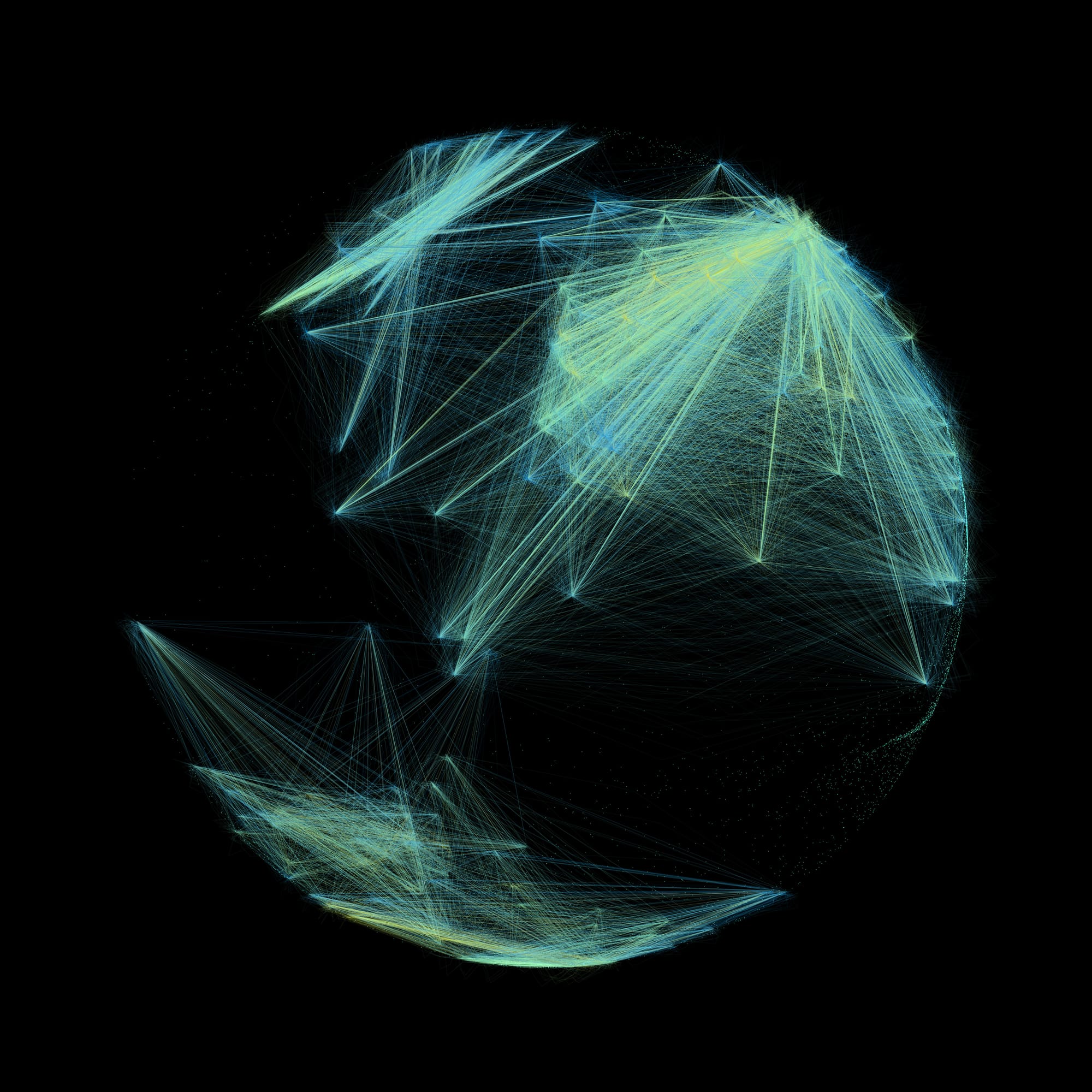
Crucially, as long as you are still orbiting, you have not failed. You haven't fallen out of the system. The power of this model is that it captures intensity, consistency, and recovery all at once. It tracks the shape of your engagement, allowing us to see how the practice itself is evolving over time, a far more accurate measure than a simple checkmark.
🔑 Key Takeaway: Progress should be viewed as multi-dimensional movement (an orbit), not a single dimension (a line).
V. Ethical Design: Building for Humans, Not Retention Metrics
The conflict in modern habit tracking is not just about features; it is about incentives.
The conflict in modern habit tracking is not just about features; it is a deep ethical dispute over incentives. Most applications are engineered with one primary goal: maximizing Daily Active Users (DAU). Their metrics, how often you open the app, how many buttons you click, force them to employ psychological levers like dopamine loops and guilt-driven re-engagement tactics. They weaponize perfectionism because a broken streak is a powerful trigger designed to bring users back into the application; their success is built on exploiting human anxiety.
Streqo operates under a fundamentally different mandate: long-term, ethical habit resilience. Our measure of success shifts from mere activity counts to sustainable growth. If you take a week off due to illness and return with renewed strength, that's proof of life for our philosophy. If you achieve a partial win on a difficult day, that is evidence of persistence. We succeed only when users achieve lasting, meaningful growth, not merely by succumbing to the compulsion to check a box for retention metrics.
This distinction is not just philosophical; it is architecturally baked into the tool. The Quantum Streak, Partial Wins, and the Orbit Model are not "premium features" that can be toggled on or off. They are the default embodiment of an ethical design choice: they reflect the true, messy, non-linear reality of human behavior. We build for the user's long-term well-being, never just for our own retention metrics.
Conclusion: The End of the Perfect Streak
For too long, we have been sold a lie: that the gold standard of self-improvement is an unbroken chain of perfect days. We have been led to believe that any lapse in consistency is a fundamental failure of character. But as we have seen, this "perfect streak" is nothing more than a fragile, guilt-driven illusion, a construct designed by software engineers to serve engagement metrics rather than human growth.
The Paradigm Shift
It is time to adopt a new standard. We must shift our definition of success from flawless execution to honest reflection. A truly effective system does not demand perfection; it demands resilience. It is one that absorbs your misses, honors your partial efforts, and accurately tracks your true trajectory over time.
🌟 The Guiding Principle: Resilience is the new perfection.
Acknowledging that you are part of a messy, fluctuating, human process is not a failure, it is evidence of continued effort. Such a system is fundamentally more humane and accurate.
We are building something different. A system that doesn't demand perfection, but celebrates your persistence.
The Streqo Difference: Building for Reality
You do not need to be perfect to be consistent. You do not need to be flawless to be growing. You only need a system that tells you the truth about your progress, even on days when that truth is messy, fragmented, or uncertain.
This principle that accountability must serve growth, not retention metrics is what defines ethical design in habit tracking.
This article is the third and final installment in our series on the psychology of productivity tracking. Read Gamification and Guilt and The Tyranny of the Streak to understand the full argument.